The Critical Role of Near Accurate Cervical Length Measurement in Pregnancy Outcomes

Pregnancy is a complex journey where every detail matters, especially when it comes to monitoring the health of both mother and baby. One crucial factor that often determines pregnancy outcomes is the length of the cervix. Measuring cervical length with near accuracy can provide vital information that helps healthcare providers predict and prevent complications such as preterm birth. This post explores why precise cervical length measurement is essential, how it impacts pregnancy management, and what methods ensure the best results.

Why Cervical Length Matters in Pregnancy
The cervix acts as a gatekeeper during pregnancy, holding the fetus inside the uterus until it is time for delivery. Its length and firmness are indicators of how well it can maintain pregnancy. A shorter cervix can signal a higher risk of premature labor, which is a leading cause of neonatal complications and infant mortality worldwide.
Short cervix increases risk of preterm birth: Research shows that women with a cervical length less than 25 millimeters before 24 weeks of gestation have a significantly higher chance of delivering prematurely.
Early detection allows timely intervention: Identifying cervical shortening early enables doctors to recommend treatments such as progesterone therapy or cervical cerclage to reduce the risk of early labor.
Improves pregnancy monitoring: Regular and accurate cervical length measurements help track changes over time, guiding decisions on hospitalization or activity restrictions.
How Near Accurate Measurement Influences Care
Near accurate cervical length measurement means obtaining results that closely reflect the true length of the cervix with minimal error. This precision is critical because even small inaccuracies can lead to misclassification of risk and inappropriate management.
Avoids unnecessary interventions: Overestimating cervical shortening might lead to unnecessary treatments, causing stress and potential side effects.
Prevents missed diagnosis: Underestimating cervical shortening can delay crucial interventions, increasing the risk of preterm birth.
Supports personalized care: Accurate data allows healthcare providers to tailor monitoring and treatment plans based on individual risk profiles.
Methods for Measuring Cervical Length
Several techniques exist for measuring cervical length, each with varying degrees of accuracy and practicality.
Transvaginal Ultrasound(Gold standard)
This method is considered the gold standard for cervical length measurement due to its high accuracy and reproducibility.
Procedure: A small ultrasound probe is gently inserted into the vagina to get a clear view of the cervix.
Advantages: Provides precise images, less affected by maternal body habitus or bladder filling.
Transabdominal Ultrasound
This non-invasive method uses an ultrasound probe on the abdomen.
Procedure: The probe is placed on the lower abdomen to visualize the cervix.
Advantages: More comfortable for the patient.
Limitations: Less accurate due to interference from bladder filling, fetal position, and maternal obesity.
Best Practices for Accurate Measurement
To achieve near accurate cervical length measurement, healthcare providers should follow these guidelines:
Use transvaginal ultrasound when possible: It offers the most reliable results.
Ensure proper patient preparation: The bladder should be empty to avoid distortion of the cervix.
Standardize measurement technique: Measure the shortest functional length of the cervix from the internal to the external os.
Repeat measurements if necessary: Confirm findings with multiple scans to rule out errors.
Train sonographers thoroughly: Skilled operators reduce variability and improve accuracy.

Impact of Accurate Cervical Length Measurement on Pregnancy Outcomes
Accurate cervical length measurement directly influences clinical decisions that improve pregnancy outcomes.
Reduces preterm birth rates: Studies indicate that screening high-risk women and treating those with short cervices can lower preterm birth by up to 50%.
Improves neonatal health: Preventing early delivery reduces complications such as respiratory distress syndrome, infections, and long-term disabilities.
Optimizes resource use: Targeted interventions avoid unnecessary hospital stays and treatments, benefiting healthcare systems and families.
Funneling of cervix-A structural change in the cervix during pregnancy where the internal opening (internal os) begins to dilate and open up prematurely, while the external opening (external os) remains tightly closed.. This ca
A woman with a history of preterm birth. At 20 weeks, a transvaginal ultrasound at our ultrasound clinic reveals her cervical length is 22 millimeters, below the 25-millimeter threshold with cervical funneling. Greater than 50% funneling before 25 weeks is associated with an 80% risk of preterm delivery.Timely management is of utmost importance.
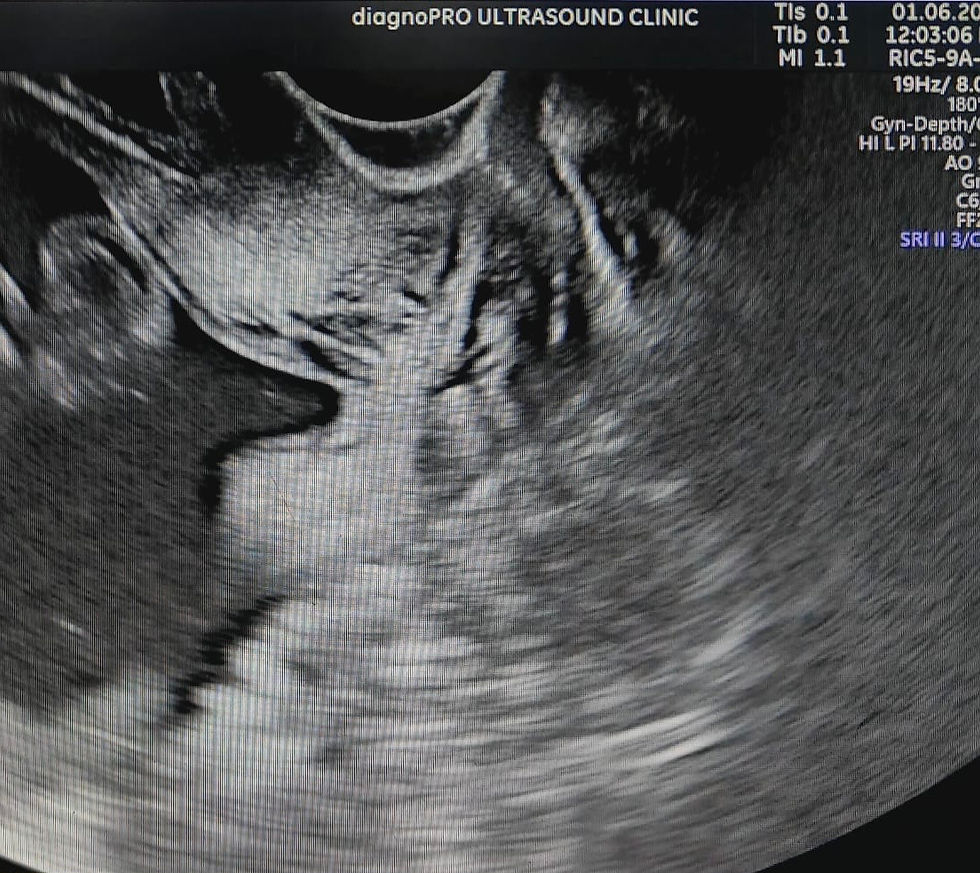
We followed up a previous case of cervical incompetence whose cervical length was 24mm and her gynacologist had done cervical encerclage ,had advised patient for rest , medical treatment and close ultrasound monitoring.The healthy baby was delivered at around 36weeks.
RADIOLOGIST/SONOLOGIST ERRORS-
Applying too much probe pressure,lack of experience, misidentifying the internal os, using the wrong ultrasound approach, and failing to record the shortest measured value.
Radiologist or sonographer errors in measuring cervical length usually stem fro
Future Directions in Cervical Length Measurement
Advances in technology and research continue to improve the accuracy and accessibility of cervical length assessment.
Automated ultrasound analysis: Software algorithms can assist in measuring cervical length, reducing human error.
Portable ultrasound devices: These allow for wider screening in low-resource settings.

Summary
Near accurate measurement of cervical length plays a critical role in predicting and preventing preterm birth. It guides timely interventions, supports personalized care, and improves outcomes for mothers and babies. Healthcare providers should prioritize precise measurement techniques, especially transvaginal ultrasound, to ensure reliable data. Pregnant women, particularly those at high risk, benefit from regular cervical length monitoring as part of comprehensive prenatal care.
Taking steps to improve cervical length measurement accuracy can make a meaningful difference in pregnancy outcomes. If you are pregnant or care for pregnant women, discuss cervical length screening with your healthcare provider to understand its role in your pregnancy journey.


Comments